
Slab leak water damage in Cardiff-by-the-Sea happens when corroded copper supply pipes beneath a concrete foundation develop pinhole leaks, saturating the slab and wicking moisture into flooring and walls. Early signs include warm floor spots, unexplained water bill spikes, and cupped hardwood—requiring prompt leak isolation followed by professional slab leak water damage cleanup.
Unlike a burst washing-machine hose that floods a hallway in plain sight, an under-slab plumbing leak can run silently beneath your feet for days or weeks. Across Cardiff-by-the-Sea, thousands of single-family homes and townhomes built between the 1960s and the early 1990s rest directly on poured concrete slabs with hot and cold copper water lines routed underneath the concrete.
In neighborhoods like the Composer District, Cardiff Cove & Park Place, and neighboring Solana Beach, slab leaks are among the most common triggers for major flooring and drywall claims. Knowing how to spot the earliest warning signs—and separating the plumbing repair from the structural drying phase—can save you thousands of dollars in avoidable tear-out.
Why Are Cardiff-by-the-Sea Concrete Slabs Prone to Copper Pinhole Leaks?
Four local factors accelerate copper pipe wear under 92007 slabs: aging pipe thickness, coastal salt-air chemistry, sandy soil abrasion, and thermal expansion on hot-water loops. Many mid-century coastal homes were plumbed with Type M or Type L copper tubing laid directly in sandy coastal soil before the concrete slab was poured.
Every time you run a hot shower, the hot-water copper line expands microscopically and rubs against gritty coastal sand or concrete edges. Over 30 to 50 years, friction and local water chemistry thin the copper wall from the inside and outside until a pinhole opens. Once pressurized water—often at 60 to 80 PSI—escapes beneath the slab, it searches for the path of least resistance: upward through hairline shrinkage cracks, expansion joints, and plumbing stub-outs directly beneath your kitchen cabinets, hallway baseboards, and living room floors.
Early Warning Signs: Diagnostic Checklist for Cardiff Homeowners
Catching a slab leak in week one instead of month two makes the difference between drying salvageable floors in place and replacing an entire first-floor kitchen. Review the diagnostic matrix below to evaluate what you are seeing at home.
| Observable Symptom | Likely Cause | Immediate Action to Take |
|---|---|---|
| Warm or hot patch on tile or carpet | Under-slab hot-water copper pinhole heating the concrete | Check water heater cycling and perform the street water-meter spin test |
| Cupping hardwood or bubbling LVP seams | Moisture vapor pushing upward through slab pores into floor backing | Stop running wet-mops; schedule thermal moisture mapping immediately |
| Unexplained jump in water bill | Continuous pressurized leak (even a pinhole wastes thousands of gallons/month) | Shut off main house valve; verify meter stops spinning to confirm house-side leak |
| Hissing or running-water sound near walls | Pressurized spray beneath concrete resonating up copper risers | Turn off main shutoff valve overnight if leak sounds loud and call a leak detector |
| Damp baseboards or peeling hallway paint | Capillary wicking from wet concrete into bottom wood sill plates & drywall | Arrange slab leak water damage cleanup & cavity drying |
| Cracked tile grout or loose hollow tiles | Water weakening thin-set mortar bond above a damp slab crack | Avoid walking heavily on loose tiles; document with photos for insurance |
How to Run the 5-Minute Water Meter Test Before Calling
A simple water meter check confirms whether water is actively leaking inside your plumbing system versus coming from irrigation or exterior rain. Follow these steps:
- Make sure every indoor faucet, dishwasher, washing machine, toilet fill valve, and outdoor hose bib is completely off.
- Locate your municipal water meter box (usually near the front curb or driveway apron in Cardiff-by-the-Sea).
- Carefully lift the lid and inspect the meter face for a small spinning flow indicator (often a tiny red triangle, blue star, or gear wheel).
- If the indicator spins while everything is off, close your house's main shutoff valve (usually near the front hose bib or garage wall).
- Check the meter again: if it stops spinning when the house valve is closed, the leak is inside your home's plumbing or beneath your slab—not in the yard main line.
Plumbing Repair vs. Water Mitigation: Why You Need Both Steps Done Right
One of the biggest mistakes homeowners make after discovering a slab leak is stopping once the plumber finishes the pipe reroute. A plumber stops new water from entering the slab, but hundreds of gallons of water may already be sitting inside the concrete, beneath the kitchen cabinets, and inside the lower 18 inches of hallway drywall.
In Cardiff's humid marine-layer climate—especially west of I-5 in the Walking District or bordering San Elijo Lagoon—trapped slab moisture does not vanish on its own. Leaving damp concrete covered by floating vinyl planks or area rugs creates an anaerobic moisture pocket that triggers foul odors and microbial growth within days. Proper Cardiff-by-the-Sea water damage restoration bridges that gap through four specialized mitigation stages:
1. Infrared Thermal & Pinless Moisture Mapping
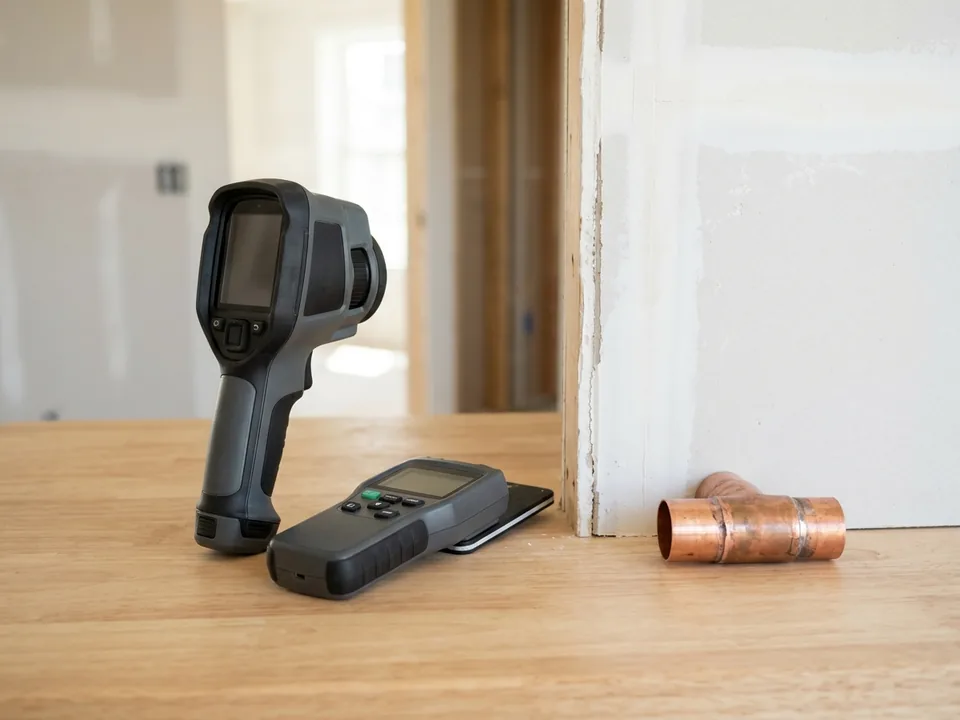
Independent restoration technicians sweep floors and adjacent interior walls with FLIR infrared cameras and pinless concrete moisture meters (like Protimeter units). Thermal imaging highlights cool evaporative zones beneath tile and behind painted drywall so nothing wet gets missed.
2. Targeted Extraction & Flooring Triage
If standing water pooled under floating floors or saturated carpet padding, technicians begin with emergency water extraction. Saturated carpet pad is normally removed cleanly because dense foam traps moisture against the slab. For salvageable solid hardwood, technicians may deploy negative-pressure hardwood drying mats (such as Injectidry panels) that pull moisture upward through the tongue-and-groove seams.
3. Baseboard Detachment & Wall-Cavity Airflow
Concrete slabs sit directly beneath the wooden bottom plates of interior partition walls. When a slab saturates, water wicks vertically into framing and gypsum paper. Detaching baseboards—and performing clean drywall flood cuts if moisture wicked high or contaminated water was involved—exposes wet framing to dry air.
4. Extended LGR Dehumidification & Slab Dry-Standard Verification
Because concrete is far denser than drywall, structural drying and dehumidification after a slab leak often takes 4 to 7 days of continuous LGR dehumidifier runtime. Technicians log daily readings and verify slab moisture drops to manufacturer-safe levels before your flooring installer lays down new wood or luxury vinyl.
Insurance Considerations for Slab Leaks in California
California homeowners insurance policies treat slab leaks with a very specific distinction: most standard policies do not pay to replace the corroded copper pipe itself (considering pipe corrosion wear-and-tear), but many policies do cover the resulting sudden water damage to flooring, baseboards, cabinets, and drywall—and sometimes the cost to access and close the slab. Reviewing our California homeowners insurance water damage guide before discarding damaged flooring helps you preserve clear photo and moisture-log evidence.
What Should You Do Right Now If You Suspect a Slab Leak?
If your floor feels warm, your water meter is spinning, or hardwood planks are beginning to cup in Cardiff-by-the-Sea, act promptly. Shut off the hot-water valve on top of your water heater (if the warm spot points to a hot line) or close the main shutoff valve overnight to stop further saturation. Estimate potential mitigation factors with our local cost calculator, or call (760) 555-0194 to connect with an independent local restoration contractor for moisture mapping and slab drying.
Frequently Asked Questions
Turn off every faucet, ice maker, washing machine, and irrigation zone, then lift the lid on your water meter box near the street. If the small red or blue leak-indicator triangle is spinning—or the dial moves over 15 minutes—water is escaping somewhere on your property.
Not always. Many plumbers offer an overhead PEX repipe or reroute through walls and attic spaces that bypasses the leaking under-slab copper line completely without breaking concrete inside the home.
Concrete holds moisture deeply. Surface dryness can appear in 24 hours, but bringing a saturated concrete slab down to a safe vapor-emission level for new hardwood or vinyl flooring typically requires 4 to 7 days of targeted LGR dehumidification and airflow.
Pressurized hot water heats the concrete slab, creating intense upward vapor drive that pushes steamy moisture into hardwood adhesives, laminate cores, and drywall paper much faster than cold water.